
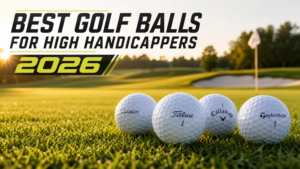
Updated for 2026 — the same goal, smarter picks.
If you’re shooting in the 90s (or beyond), the golf ball you play matters more than most people tell you. Notbecause a ball is going to fix your swing — it won’t — but because the wrong ball will punish every mishit, while the right one gives you a fighting chance at distance and straight flight even on your off swings. This is a complete guide to the best golf balls for high handicappers and beginners in 2026, updated with the latest gear, real comparisons, and a buyer’s guide that actually helps you decide.
Do Golf Balls Really Make a Difference for High Handicappers?
Short answer: yes, significantly. But maybe not in the way you’re thinking.
For low handicappers, ball selection is about spin control and feel around the greens. For high handicappers, it’s about forgiveness and distance off mis-hits. A premium tour ball with a urethane cover and high spin rate is actually working against you — it amplifies the sidespin on every slice and hook.
What you want instead is a low compression, two-piece golf ball with a Surlyn cover. These balls compress more easily on impact (so you don’t need a 105 mph swing to activate them), produce lower spin off the driver (fewer slices), and are built to fly straighter. Think of it as a forgiving iron — same principle, different product.
As a bonus, they’re almost always cheaper. Win-win.
What to Look for in Golf Balls for High Handicappers
Before we get into the specific picks, here’s what separates a high-handicap-friendly ball from everything else in the golf equipment reviews world:
- Low compression (70 or below): Easier to compress at slower swing speeds, meaning more energy transfer and more distance even on off-center hits.
- Soft feel: Reduces harsh feedback on mishits. Also helps around the greens once your short game develops.
- Low driver spin: Less sidespin = fewer banana slices. This is the big one.
- Two-piece construction: A large core + durable cover. Simpler = more forgiving = better for beginners.
- Durability: You’re probably losing a few per round. Surlyn covers hold up better than urethane when they meet cart paths, trees, and water hazards.
Best Golf Balls for High Handicappers 2026
These are the top picks for high handicap golfers and beginners who want low compression golf balls that maximize forgiveness and distance for the money.
1. Titleist TruFeel — Best Overall Soft Feel
Titleist’s most accessible ball is still one of the best soft feel golf balls you can buy in 2026. The TruFeel plays with a compression around 62, making it one of the softer options from a major brand. Off the tee, it launches high with reduced spin — exactly what a high handicapper needs. Around the greens, it has enough feel to be genuinely useful once your short game starts coming around. Also available in yellow for easier visibility.
- Compression: ~62
- Cover: TruFlex (Surlyn blend)
- Best for: High handicappers who want a premium feel without a premium price
- Price: ~$25–30/dozen
2. Callaway Supersoft — Best for Maximum Forgiveness
The Callaway Supersoft is one of the most popular forgiving golf balls for high handicappers year after year — and for good reason. At a compression of around 38, it’s one of the softest balls on the market, which means even slower swing speeds get solid distance. The HEX Aerodynamics dimple pattern helps it fly straighter and higher. Available in a wide range of colors if you’re constantly hunting your ball in the rough (no judgment).
- Compression: ~38
- Cover: Tri-ionomer (Surlyn-type)
- Best for: Beginners and seniors with slower swing speeds
- Price: ~$23–28/dozen
3. Srixon Soft Feel — Best Balanced Performance
The Srixon Soft Feel is a solid pick if you’re somewhere between “total beginner” and “getting serious.” It has low spin off the driver but generates more spin around the greens than most two-piece balls in its price range — making it a good transitional ball as your game improves. Available in multiple colors including a bright orange that’s easy to track on overcast days.
- Compression: ~60
- Cover: Ionomer
- Best for: High handicappers who are actively improving and want a ball that’ll grow with them
- Price: ~$20–26/dozen
4. Bridgestone e6 — Best for Reducing Slices
If your main problem is the slice, the Bridgestone e6 is specifically engineered for you. Bridgestone designed this ball around golf balls for distance and accuracy — it has a low-spin core that actively reduces the sidespin that causes hooks and slices. The result is a noticeably straighter ball flight. It’s not going to feel as soft as the Supersoft, but if straightness is your priority, this is your ball.
- Compression: ~60
- Cover: Surlyn
- Best for: Chronic slicers who want to keep the ball in the fairway
- Price: ~$24–29/dozen
5. Wilson Duo Soft+ — Best Budget Pick
The Wilson Duo Soft+ is one of the best golf balls under $30 — often well under. It claims the title of world’s softest two-piece ball, with a compression of just 29. That’s incredibly soft, and it shows: high launch, very low spin, easy distance. You won’t get much around the greens, but for a high handicapper focused on getting the ball airborne and forward, that’s a fair trade. Great for beginners who don’t want to spend a lot while they’re still losing balls regularly.
- Compression: ~29
- Cover: DuoSoft ionomer
- Best for: Budget-conscious beginners, high-loss-rate golfers
- Price: ~$15–20/dozen
2026 Comparison Table — High Handicap Golf Balls
| Golf Ball | Compression | Best For | Price/Dozen | Key Strength |
|---|---|---|---|---|
| Titleist TruFeel | ~62 | Overall best pick | $25–30 | Premium soft feel, trusted brand |
| Callaway Supersoft | ~38 | Slower swing speeds | $23–28 | Ultra-forgiving, high launch |
| Srixon Soft Feel | ~60 | Improving players | $20–26 | Balanced driver + short game |
| Bridgestone e6 | ~60 | Chronic slicers | $24–29 | Low sidespin, straightest flight |
| Wilson Duo Soft+ | ~29 | Budget beginners | $15–20 | Cheapest, ultra-soft, max forgiveness |
Best Golf Balls for Mid Handicappers in 2026
If you’ve knocked your handicap down into the 10–18 range, your ball selection can evolve. You’re now consistent enough to benefit from a bit more short-game spin, while still wanting forgiveness off the tee. These three balls hit that sweet spot.
| Golf Ball | Key Feature | Best For |
|---|---|---|
| TaylorMade Tour Response | Urethane cover, tour-level feel at mid price | Mid handicappers wanting short-game control |
| Titleist Tour Soft | Large core, long off the tee, good greenside feel | Golfers wanting extra distance with control |
| Bridgestone e12 Contact | Contact Force Dimple tech, reduced spin off iron mis-hits | Consistent mid-handicap iron players |
Best Golf Ball for the Money in 2026
If you’re on a tight budget or still regularly losing 4+ balls per round, don’t spend $45 on a dozen Pro V1s. The Vice Drive gives you distance, forgiveness, and durability at a fraction of the cost — typically around $18–22/dozen. It comes in multiple colors and holds up surprisingly well compared to premium options. It’s not going to feel like a tour ball around the greens, but for a high handicapper focused on distance and direction, it’s a smart buy.
💡 Pro Tip: Don’t buy premium balls until you’re consistently breaking 90. At that point, your short game is developed enough to actually feel the difference. Until then, save the money and stock up on soft, low-compression options.
High Handicap Golf Ball FAQ
What compression is best for high handicappers?
Look for compression ratings of 70 or below. The Callaway Supersoft (38) and Wilson Duo Soft+ (29) are among the softest. Lower compression means the ball deforms more on impact, which transfers more energy — especially helpful for golfers with swing speeds under 90 mph.
Should high handicappers use Pro V1s?
Generally no. The Pro V1 is a high-spin, high-compression ball designed for golfers who can shape shots deliberately. For a high handicapper, that extra spin magnifies mishits. Stick with soft two-piece options until you’re in the mid-single digit range.
How many golf balls should a beginner carry per round?
At least a sleeve (3) per 9 holes as a baseline. If you’re playing a water-heavy course, bring a full dozen. There’s zero shame in playing a $1 ball when you’re learning — the course won’t care, and neither should you.
Does ball color affect performance?
No — but high-visibility colors (yellow, orange, green) genuinely help you track the ball in the air and find it in the rough. For beginners, we’d recommend going colored at least while you’re developing your eye for ball flight.
The Bottom Line
For high handicappers in 2026, the best golf ball is the one that keeps the ball in play, goes the distance even on imperfect strikes, and doesn’t empty your wallet every time you visit a water hazard. Start with the Callaway Supersoft if you want maximum forgiveness, the Titleist TruFeel if you want a step up in feel and quality, or the Wilson Duo Soft+ if budget is the priority. All three are solid golf equipment choices for anyone building their game.
As your game improves and you start breaking 90 consistently, graduate to mid-handicap options like the TaylorMade Tour Response or Titleist Tour Soft — you’ll start to feel the difference.
Top Golf Swing Analyzers That Actually Improve Your Game (Backed by Data)
I Tried Sqairz Golf Shoes—Here’s What Happened to My Game
Ready to level up your full gear setup? Browse our full gear guides at GolfGuidesZone.com for honest reviews across every category.